

Last Updated: October 27, 2026
Quick Summary
Rehab exercises for acl surgery recovery follow a structured 6-12 month progression across three phases: early phase (weeks 1-4) focuses on managing swelling and restoring range of motion with quad sets and heel slides, intermediate phase (weeks 5-12) adds progressive resistance and weight-bearing exercises like lunges and hip strengthening, and advanced phase (weeks 13+) introduces plyometrics and sport-specific drills for return-to-play readiness.
- Most athletes return to sport between months 6-9 with disciplined adherence to the recovery framework.
- Early phase exercises include quad sets, heel slides, and straight leg raises to prevent strength loss.
- Intermediate phase emphasizes lunges, hip abduction and adduction, and balance training on unstable surfaces.
- Advanced phase introduces lateral bounds, jumping drills, and single-leg landing holds for power and agility.
- Running clearance typically occurs weeks 12-16, starting on flat surfaces and progressing gradually based on strength and swelling control.
Table of Contents
- Understanding Your ACL Surgery Recovery Timeline
- Early-Phase Rehab: Weeks 1-4 After Surgery
- Intermediate Phase: Weeks 5-12 After Surgery
- ACL Rehab Exercises at Home Without Equipment
- Advanced Phase: Weeks 13+ and Sport-Specific Drills
- Exercises to Avoid After ACL Surgery
- Return to Running After ACL Surgery
- Pain, Swelling, and Symptom-Based Progression
- Tools and Equipment to Support Your Recovery
- Starting Your Personalized Rehab Plan
- Frequently Asked Questions
Understanding Your ACL Surgery Recovery Timeline
ACL reconstruction is a significant surgery, and understanding recovery phases sets realistic expectations for rehab exercises for acl surgery recovery. Most athletes can expect a structured 6-12 month progression: early phases protect the repair and restore range of motion, middle phases add progressive resistance and weight-bearing work, and later phases introduce sport-specific drills and return-to-play testing (ncbi.nlm.nih.gov).
Your timeline varies by graft type (patellar tendon, hamstring, or allograft), concurrent procedures like meniscus repair, and your surgeon's restrictions. Your surgeon's protocol is your baseline.
Recovery isn't linear. Swelling spikes, pain flares, or psychological barriers can slow progress. The key is symptom-based progression: advance when you're ready, not just when the calendar says so.
ACL recovery follows a structured progression across three main phases over 6-12 months.
| Recovery Phase | Timeline | Primary Focus | Key Activities |
|---|---|---|---|
| Early Phase | Weeks 1-4 | Manage swelling, restore extension, activate quads | Quad sets, heel slides, straight leg raises |
| Intermediate Phase | Weeks 5-12 | Progressive resistance and weight-bearing | Lunges, hip strengthening, balance training |
| Advanced Phase | Weeks 13+ | Power, agility, sport-specific readiness | Plyometrics, landing mechanics, sport drills |
| Return to Sport | Month 6-9 | Full functional return | Sport-specific movements with confidence |
Early-Phase Rehab: Weeks 1-4 After Surgery
The first month after ACL reconstruction focuses on three priorities: managing swelling and pain, restoring knee extension, and initiating quadriceps activation. Aggressive loading is contraindicated, so gentle movement and isometric strengthening build the foundation for later progression.
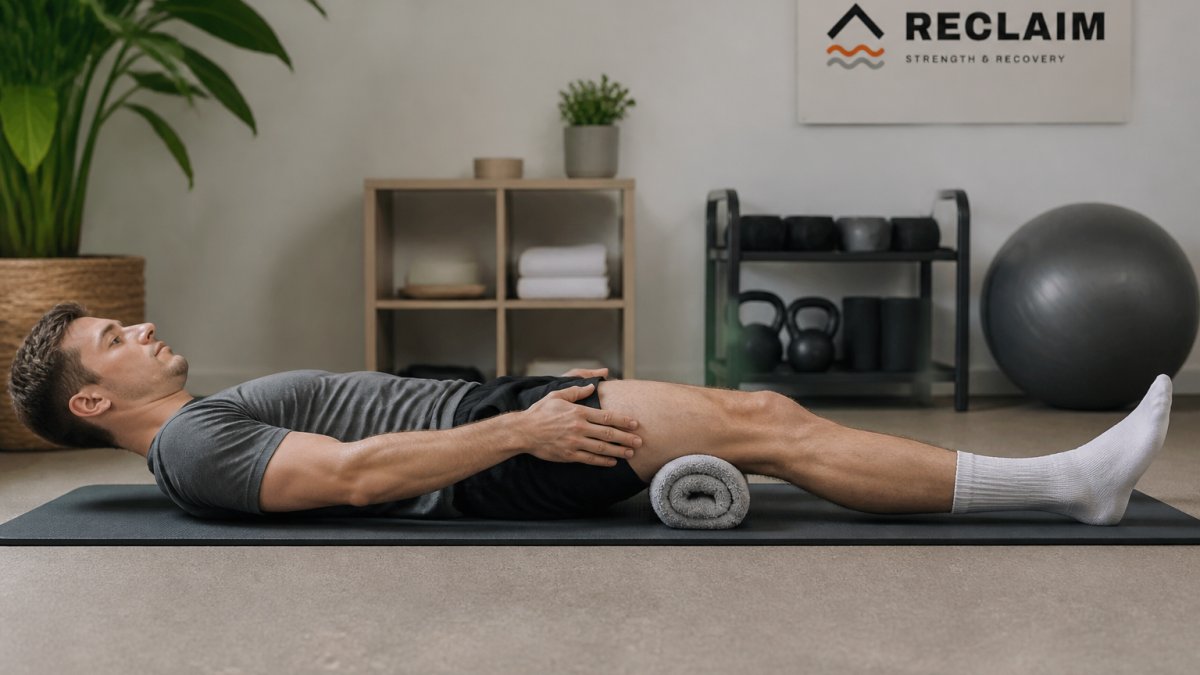
Quad Sets and Isometric Strengthening
Perform quad sets immediately after surgery (with clearance) through weeks 1-4 and beyond; this single exercise prevents significant strength loss during the critical early phase.
Heel Slides and Knee Flexion Work
Modify heel slides by reducing range if pain spikes, or use a plastic bag under your heel to reduce friction. The goal is gradual, pain-free range-of-motion progression.
Straight Leg Raises for Quadriceps Activation
By week 4, most patients add ankle weights or resistance bands for increased load, but only if pain and swelling remain controlled.
Intermediate Phase: Weeks 5-12 After Surgery
Weeks 5-12 mark a shift: rehab exercises for acl surgery recovery emphasize progressive resistance and weight-bearing exercises as your knee tolerates increased load. This phase builds strength, restores single-leg stability, and improves proprioception.
Progressive Resistance and Weight-Bearing Exercises
Lunges require balance and coordination. Start without weight, using a wall or rail, then progress to dumbbells or a barbell as strength improves.
Hamstring, Calf, and Hip Strengthening
Hip strengthening deserves dedicated attention. Hip abduction and adduction stabilize the pelvis during single-leg activities. Loop a resistance band around your thighs, stand with slight knee bend, and move one leg out to the side against resistance for 3 sets of 12-15 per leg. Repeat for adduction, moving your leg inward.
Balance Training and Unstable Surface Work
Unstable surface work mimics cutting, pivoting, and uneven terrain, rebuilding the neural pathways that control knee stability during complex movements. A balance board provides an unstable surface for this training.

ACL Rehab Exercises at Home Without Equipment
Single-leg balance, standing on one leg for 30-60 seconds, requires no equipment and can be done anywhere. Resistance bands enable strengthening exercises like hip abduction and adduction without heavy equipment. Perform 3 sets per leg, multiple times weekly, progressing by closing your eyes or adding arm movements.

Advanced Phase: Weeks 13+ and Sport-Specific Drills
Weeks 13 and beyond introduce higher-intensity exercises and sport-specific movements. Most patients have regained significant strength and range of motion, so the focus shifts to power, agility, and return-to-sport readiness.
Plyometrics and Mini Jumps
Lateral bounds, jumping side-to-side, train the lateral stability critical for cutting and changing direction. Bound from one leg to the other, covering lateral distance while maintaining control. Perform 3 sets of 6-8 bounds per direction.
5 PC Set Resistance Band Resistance Bands, Exercise Bands, Exercise Resistance →
Sport-Specific Movement and Landing Mechanics
Landing mechanics drills reinforce proper form during plyometrics. Perform single-leg landing holds: jump off a low box and land on one leg, holding a stable position for 2-3 seconds. Perform 3 sets of 5 repetitions per leg. This drill builds confidence and proprioceptive control.
Exercises to Avoid After ACL Surgery
Plyometric exercises with poor landing mechanics or excessive volume early in recovery risk re-injury. Progress plyometrics gradually, focusing on form before intensity.
Return to Running After ACL Surgery
Running is a milestone many athletes prioritize. Most surgeons clear patients between weeks 12-16, but readiness depends on strength, swelling control, and confidence, not just timeline.
Building Aerobic Base on Low-Impact Equipment
An elliptical trainer (when available) provides running-like motion with lower impact. Begin by week 6-8 with 15-20 minute sessions, progressing similarly to cycling. The elliptical's stride pattern more closely mimics running than cycling, making it a valuable progression tool.
Running Readiness Testing and Progression
Run on flat, predictable surfaces initially, avoid hills, trails, and uneven terrain until week 16-20. Flat surfaces reduce proprioceptive demands and injury risk during early running phases.
Pain, Swelling, and Symptom-Based Progression
Psychological readiness matters as much as physical readiness. Fear of re-injury is common and valid. Progress gradually, building confidence through successful experiences. A portable massage gun can help manage soreness and swelling, supporting symptom-based progression by reducing pain and promoting blood flow.
Tools and Equipment to Support Your Recovery
A massage gun reduces muscle tension and swelling, supporting symptom-based progression. The percussive massage increases blood flow, aiding recovery between sessions.
Starting Your Personalized Rehab Plan
Track your progress: record exercise volumes, note swelling patterns, and monitor pain levels. Progression isn't always linear, but consistent effort compounds. Most athletes return to sport by month 6-9 with disciplined adherence to this framework.
Frequently Asked Questions
When can I start exercising after ACL surgery?
You can begin gentle rehab exercises for ACL surgery recovery within the first few days after surgery, under your surgeon's guidance. Early-phase work focuses on quad sets, straight leg raises, and range-of-motion drills to prevent stiffness and activate the quadriceps. Your surgeon and physical therapist will provide specific clearance based on your graft type, additional procedures, and healing progress. Starting too aggressively risks graft failure; starting too late risks permanent stiffness.
How long does ACL surgery recovery typically take?
Full ACL surgery recovery timeline spans 6-12 months. Weeks 1-4 focus on swelling control and early mobility. Weeks 5-12 emphasize strengthening and weight-bearing progression. Weeks 13+ involve sport-specific drills and return-to-sport testing. Most athletes clear for unrestricted activity by 9-12 months, but individual timelines vary based on graft type, age, and adherence to rehab. Pain and swelling guide your pace, if either worsens, dial back intensity.
Which exercises should I avoid after ACL surgery?
Avoid deep squats, cutting movements, and uncontrolled twisting during early and intermediate phases. Exercises to avoid after ACL surgery include full-depth lunges, pivot drills, and single-leg work until cleared by your therapist. High-impact plyometrics, sprinting, and sport-specific drills come only in the advanced phase. Your surgeon may restrict certain movements based on your graft type or any additional repairs. Always ask your physical therapist before introducing new exercises.
When can I return to running after ACL surgery?
Return to running after ACL surgery typically begins around week 12-16 with walk-run intervals on a treadmill. Start with 1-2 minute running intervals at a comfortable pace, building gradually. By week 20-24, many athletes progress to continuous running on flat terrain. Full return to sport usually occurs at 6-9 months if strength testing shows your involved side is at least 90% of your uninvolved side. Your physical therapist will assess your readiness using objective tests, not just time elapsed.
What should I do if my knee swells or hurts during rehab exercises?
Swelling and mild discomfort are normal early on, but sharp pain or significant swelling signals you've done too much. Stop the exercise immediately and apply ice for 15-20 minutes. If swelling persists beyond a few hours or pain worsens, contact your surgeon. Pain and swelling are feedback, they tell you to dial back intensity or slow your progression. Use pain as a guide: exercises should feel challenging but not painful. Your physical therapist can adjust your plan based on these symptoms.
Can I do rehab exercises at home without going to physical therapy?
ACL rehab exercises at home can supplement in-person therapy, but they should not replace professional guidance, especially early on. A physical therapist assesses your specific graft type, additional injuries, and movement quality to design a safe progression. Home exercises work best once you've learned proper form and understand your surgeon's restrictions. Many therapists provide home exercise programs to continue between sessions. Combining supervised sessions with home work typically yields the best outcomes.
How do I know when I'm ready to return to sports after ACL surgery?
Readiness for return to sport requires more than time. Objective return-to-sport criteria include strength testing (involved leg at least 90% of uninvolved side), single-leg hop tests, balance assessments on unstable surfaces, and sport-specific drills without pain or swelling. Your physical therapist will perform these tests around 6 months post-op. You should also demonstrate controlled landing mechanics and confidence in your knee during directional changes. Clearance from both your surgeon and therapist is essential before full return to competition.
Do graft type and additional procedures affect my rehab timeline?
Yes, significantly. ACL reconstruction using different graft types (autograft, allograft, synthetic) and any additional procedures like meniscus repair or cartilage work alter your specific timeline and exercise restrictions. Your surgeon will outline personalized guidelines based on your procedure. Some grafts require longer protection before full weight-bearing or plyometrics. Always follow your surgeon's restrictions rather than generic timelines. Discuss your exact procedure and any additional repairs to understand your unique recovery path.
Your ACL recovery is a marathon, not a sprint. The exercises outlined here work, thousands of athletes have successfully returned to sport using structured progression. Stay consistent, respect your body's feedback, and progress methodically. Recovery is achievable.
